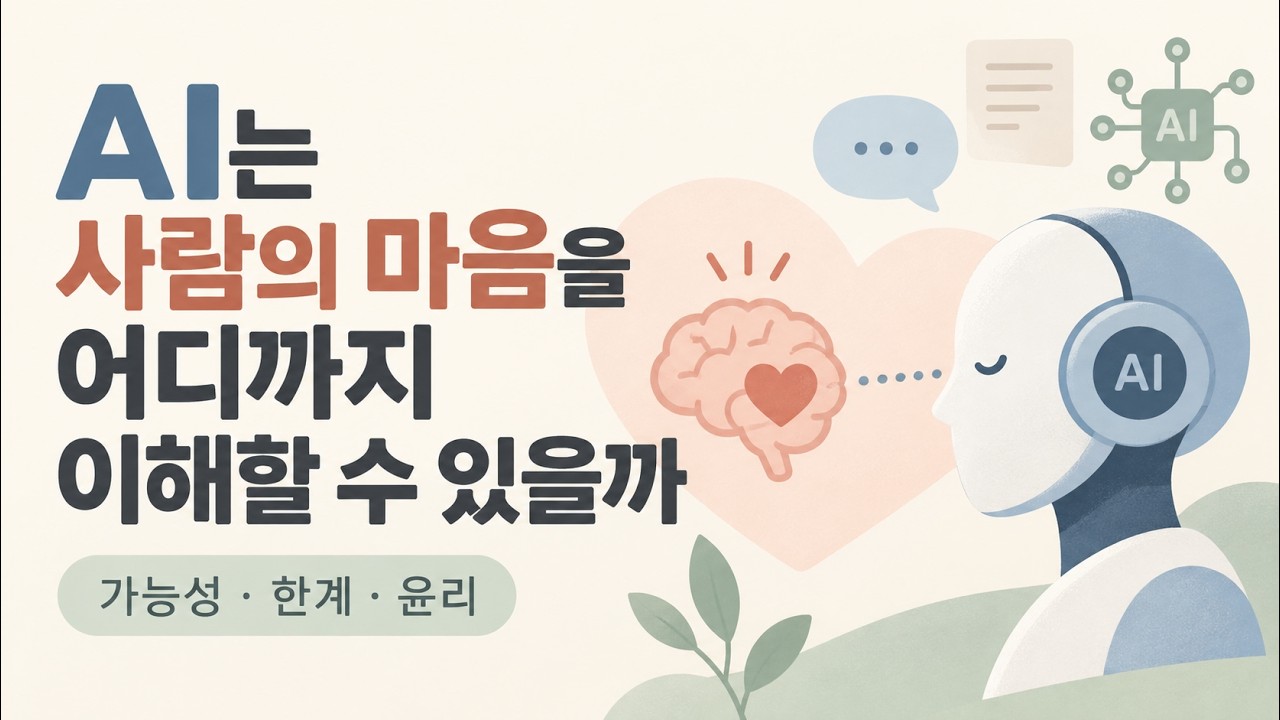



When people imagine artificial intelligence, they often think of a tool that answers questions, summarizes information, or helps write essays. Increasingly, however, AI is becoming something much more personal. Millions of users now turn to conversational AI platforms such as ChatGPT, Character.AI, and Replika not simply for productivity, but for companionship. Some users describe AI as their closest friend, while others seek advice about relationships, school, or mental health. A growing number have even reported developing romantic feelings toward AI companions.
The rise of emotionally supportive AI has prompted psychologists to ask an important question: why are people capable of forming genuine emotional attachments to something they know is not human? Rather than viewing these relationships as unusual, many researchers argue they reflect fundamental psychological processes that have existed long before artificial intelligence.
One explanation comes from a 2026 theoretical paper published in Frontiers in Psychology by Cong Shu, Kaisheng Lai, and Lingnan He. Rather than presenting experimental evidence, the authors propose a conceptual framework for understanding how emotional attachment to AI may develop. They suggest that users gradually begin to perceive AI as a social partner because it provides consistent interaction, remembers previous conversations, and responds in ways that resemble empathy. The framework argues that these characteristics may activate psychological mechanisms similar to those involved in human attachment, while also acknowledging that relationships with AI differ fundamentally from human relationships and require further empirical investigation.

https://neurosciencenews.com/human-ai-emotional-bond-29186/
Attachment theory helps explain why these relationships can become emotionally significant. Developed by British psychologist John Bowlby, attachment theory proposes that people naturally seek figures who provide safety, comfort, and emotional security. Traditionally, these attachment figures are parents, close friends, or romantic partners. However, researchers increasingly argue that AI companions may fulfill some of these same psychological functions. Because conversational AI is available twenty-four hours a day, responds almost instantly, and rarely criticizes users, it provides an unusually predictable source of emotional support. For individuals experiencing loneliness or insecure attachment, these characteristics can make AI especially appealing.
Researchers are now beginning to measure these emotional connections directly. In 2026, psychologists publishing in Computers in Human Behavior Reports developed the AI Attachment Scale, one of the first validated psychological instruments specifically designed to measure attachment toward artificial intelligence. Across five studies involving more than 1,200 participants, the researchers found that people can form attachment-like bonds with AI that resemble certain aspects of interpersonal attachment while remaining psychologically distinct from relationships with other humans. Their work suggests that emotional attachment to AI can be measured rather than discussed only through anecdotal reports. Specifically, the scale assesses users' self-reported emotional closeness to AI, the extent to which AI serves as a substitute for social interaction, and attitudes toward respecting AI. However, the researchers note that these measures do not imply AI attachment is psychologically identical to attachment between humans or that it produces the same long-term outcomes.
Another psychological explanation is anthropomorphism, or the tendency to assign human characteristics to non-human objects. People naturally give names to their cars, apologize to virtual assistants, or believe that pets understand complex emotions. Conversational AI amplifies this tendency because it communicates using natural language, remembers previous interactions, and often responds with warmth and encouragement. In a 2026 study, Marco Rüth and colleagues at the University of Cologne asked 180 participants to interact with a sample social chatbot before completing questionnaires about their perceptions. Participants who viewed the chatbot as more human-like were significantly more likely to trust it and express intentions to use similar chatbots for social interaction. Although the study examined first impressions rather than long-term AI relationships, it suggests that anthropomorphism may encourage people to view AI as a potential social companion.
Anthropomorphism alone, however, does not explain why these relationships sometimes become emotionally meaningful. Many psychologists compare AI relationships to parasocial relationships, the one-sided emotional bonds people develop with celebrities, fictional characters, or online creators. Unlike traditional parasocial relationships, AI companions actively respond to users. Conversations are personalized, memories are referenced, and emotional support appears reciprocal. Shu and colleagues argue that this interactivity creates the perception of mutual intimacy, even though the AI itself experiences no emotions. As a result, users may feel understood in ways that resemble close interpersonal relationships despite knowing intellectually that the interaction is generated by algorithms.
Behavioral psychology offers another possible explanation through operant conditioning, in which behaviors become more likely when they are followed by rewarding outcomes. Each time a person feels stressed, turns to an AI chatbot, and receives immediate encouragement or reassurance, the interaction may positively reinforce that behavior. Over repeated interactions, users may begin to habitually seek emotional comfort from AI. Although researchers have not yet demonstrated that this reinforcement process directly causes long-term emotional dependence on AI companions, operant conditioning provides a useful theoretical framework for understanding how these habits could develop.

https://helloplentiful.com/attachment-styles-101-anxious-avoidant-secure-explained
Recent studies suggest that emotional support is one of the strongest reasons people adopt AI companions. In a June 2026 study published in Frontiers in Psychology, Yue Sun and colleagues surveyed 712 AI companion users to investigate what predicts continued use. They found that trust in AI, perceived anthropomorphism, enjoyment, and usefulness all significantly increased people's willingness to use AI companions. Interestingly, trust emerged as the strongest predictor, suggesting that emotional confidence in AI may matter even more than practical usefulness when people decide whether to continue interacting with these systems.
These findings suggest that AI companionship may provide short-term psychological benefits for certain individuals, although researchers are still investigating whether these benefits persist over time.
At the same time, researchers remain cautious about encouraging emotional dependence on AI. Yale psychologist Paul Bloom argues that AI companions may help reduce loneliness by providing consistent and nonjudgmental interaction. However, he also emphasizes that AI relationships differ fundamentally from human relationships because AI never genuinely disagrees, requires compromise, or experiences emotional vulnerability. Bloom presents this as a psychological and philosophical concern rather than an established empirical finding. While some researchers believe excessive reliance on AI could reduce opportunities to practice interpersonal communication and conflict resolution, whether long-term AI companionship strengthens or weakens social skills remains an open question requiring further research.
These concerns become even more important as companies intentionally design AI to feel increasingly human. Features such as persistent memory, personalized conversations, expressive language, and emotional encouragement make interactions feel more authentic than ever before. Researchers argue that this creates ethical questions extending beyond technology itself. If AI is specifically engineered to encourage emotional attachment, technology companies may also bear responsibility for protecting vulnerable users from unhealthy dependence or emotional manipulation.
Ultimately, psychology suggests that emotional relationships with AI reflect longstanding human tendencies to seek comfort, familiarity, and understanding. Recent research shows that these attachments can be measured and explained using established psychological concepts such as attachment theory, anthropomorphism, and operant conditioning. At the same time, many of these explanations remain theoretical, and researchers are still determining how AI relationships compare with human relationships over the long term. As conversational AI becomes increasingly integrated into everyday life, future research will be essential for understanding when AI serves as a healthy supplement to human connection and when it may encourage unhealthy dependence. The challenge is not preventing people from connecting with AI, but ensuring these technologies support rather than replace meaningful human relationships.
)
)


)

)